

Leading the Model
A Guide for Men’s Ministry Leaders
You Have the Green Light. Here’s What Actually Happens Next.
Your pastor’s endorsement is the hardest part, and you already have it. What’s left isn’t complicated — it’s just unfamiliar the first time. This page walks through exactly what leading an On Target Institute ministry looks like, week to week, from the man actually running it.

The Model You’re Running
OTI is built around three fixed pieces, repeated weekly:
- A short message or teaching using the Men On Target curriculum
You’re not writing content, you’re delivering what’s already written and sequenced. - Table discussion
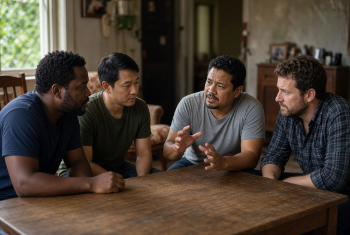
In groups of 5-8 men, the message becomes an honest conversation instead of a lecture men just sit through. - A weekly check-in call
You or your Table Leaders calling the men at your table mid-week… not about an agenda, just to ask how they’re actually doing.
If you only do the first two and skip the third, you’ve built a Bible study, not a discipleship ministry. The call is where that relationship actually gets built.
Learn more about how men respond to relational discipleship, not to programs or curriculum (Lifeway Research).
Your First 30 Days
- Recruit your first table. 5 to 8 men, not more. Start with men you already know will show up, not the biggest names in the church. Momentum matters more than status at this stage.
- Set a fixed day, time, and place, and don’t change it. Consistency turns a men’s thing into a habit men build their week around.
- Lead your first session straight from the curriculum. Don’t improvise the format yet. The Men On Target material is built to work as written. You can adapt once you’ve run it a few times and know your men.
- Make your first check-in calls the same week. Don’t wait for it to feel natural. The call is what builds the relationship, not the other way around.
- Pick one man from that first table who could lead a second table eventually. You don’t need him ready yet. You just need to be watching for him from week one, because the model only scales if you’re not the only leader forever.
What Most New Leaders Get Wrong
- Don’t wait for a big kickoff event before starting. That’s optional. Two or three men and a fixed weekly time isn’t. That’s the whole model, whether you have five men or fifty.
- Don’t treat the check-in call as optional or occasional. It’s the single highest-leverage piece of the entire structure. If you only have time to protect one habit, protect this one.
- Don’t lead every table yourself as the ministry grows. The model is built to multiply through trained Table Leaders, not through you personally scaling your own capacity. Start identifying your next leader as soon as your first table is stable, not after it’s struggling to keep up with growth.
- Don’t run it like a program instead of a relationship. Research consistently finds that men follow other men. The format supports the relationship, it doesn’t replace it.
Proof This Works at Scale
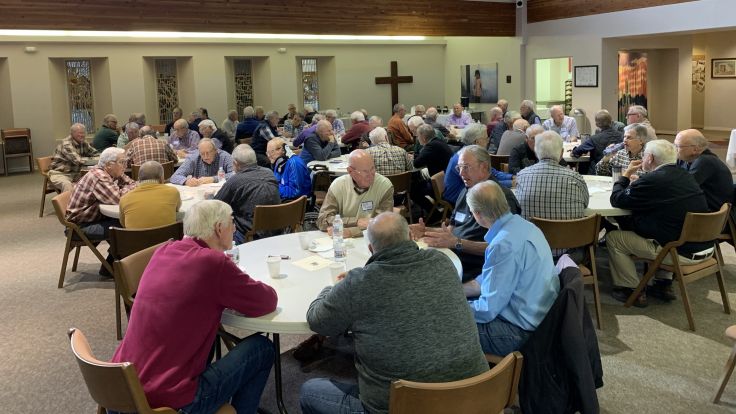
One particular church in Colorado Springs started with a single weekly OTI breakfast… 25 men, one table leader, no fanfare. Three years later, roughly 400 men meet weekly across nearly 40 different churches in that same area. Nobody scaled that by personally leading more tables. It scaled because the model was built to reproduce itself through trained leaders from the start.
That’s the trajectory this page is meant to put you on from week one, not something you back into after years of trial and error.
When You’re Ready for Your Next Table Leader
Two things made your pastor say yes to this process, and you’re now responsible for giving it to the next man: your endorsement, and a plan he doesn’t have to invent. You’re now the one supplying both, on a smaller scale, for someone else.
Barna’s thorough research points to those two factors, above all others, in churches that excel at discipleship. Make these your priority.
Talk to Vince
Find something this page doesn’t cover? Chat with Vince about recruiting, a difficult table dynamic, or just talk through how it’s going.